A smell of fresh cement and the rhythmic scrape of shovels turning sand fill the air in Kapatavingwe Shaba Village, Traditional Authority Mtwalo in Mzimba District.
It is World Toilet Day and villagers have gathered to learn how to upgrade traditional pit latrines into improved toilets.
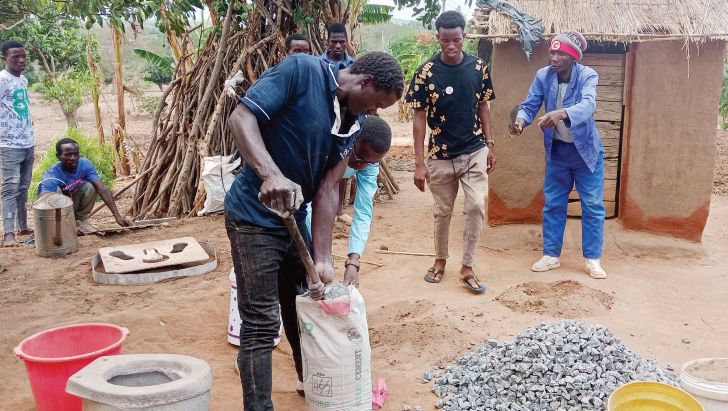
This hands-on training organised by Rural Development Partners (RDP) is more than a celebration of the November 19 global observance.
It is a transformative shift in a village determined to remain a beacon of cleanliness and health in a country where the Ministry of Health reports that over half of outpatients seek treatment for illnesses that can be prevented by insisting on safe water, sanitation and hygiene (Wash).
Group village head (GVH) Kapatavingwe Shaba proudly leads his community in the sanitation drive.
Since being recognised as a model village in 2007, the village in Mzimba North West has been a beacon of progress in terms of Wash, irrigation farming and other development initiatives.
“Every household here has a toilet,” brags Shaba, contrasting his village with many others in the neighbourhood still grappling with open defaecation.
The World Health Organisation reports that over 3.6 billion people globally lack access to safely managed sanitation, with 673 million still practicing open defaecation.
According to the Malawi 2063 socio-economic blueprint, only 35.2 percent of households used safely managed sanitation services in 2020. These include facilities that safely dispose of or treat human waste.
The breakdown in Wash is severe in rural areas, where the gaps are fuelled by poverty, taboos and inadequate infrastructure.
The consequences include diarrhoeal disease such as cholera as well as typhoid, which disproportionately affect children aged below five, causing malnutrition, deaths and economic strain.
Cholera outbreak persists in Malawi due to low access to clean water, worsened by contamination from human waste.
For the third consecutive dry season, cholera cases have been reported in Mzimba and other districts, putting the cholera-free zones on high alert ahead of the rainy season.
RDP survey in Engucwini zone found that 78 percent of the households had pit latrines, but only 24 percent were usable.
The findings show that while 81 percent had access to clean water, only 37 percent treated it for safety.
The study also revealed that 71 percent of households relied on charcoal burning, contributing to deforestation.
Child labour in agriculture affected 70 percent of households, while 58 percent reported gender-based violence tied to traditional practices.
The non-governmental organisation launched a five-year integrated project in Engucwini and Kamwe to close the gaps.
RDP executive director Daniel Nyirenda says the initiative seeks to enhance rural livelihoods through improved water supply, sustainable farming, reforestation, and hygiene education.
He sees the initiative empowering communities like Kapatavingwe “climbing the sanitation ladder from open defaecation and basic pit latrines to improved toilets with impermeable surfaces, drop-hole covers, lockable doors and hand-washing facilities”.
RDP also repairs boreholes in the area.
Nyirenda envisages trained villagers installing the simple toilet slabs in their homes without straining their budgets.
“As a model village, we expect Kapatavingwe to inspire neighbouring communities in Engucwini by serving as a learning hub,” he says. “An improved toilet can mean the difference between life and death during disease outbreaks. It’s not just about hygiene, but also dignity, health and communities’ well-being.”
RDP receives funding from Love of a Village, a Canadian organisation.
The initiative delivers Wash solutions without shaming the target communities with billboards proclaiming their past flaws as if they were waiting for foreign messiahs to bail them from conditions they could overcame on their own.
Love a Village founder Julie Seath says sanitation campaigns should empower people, not shame them.
“No one likes someone coming into their homes and rearranging furniture,” she notes. “When you build relationships first, the adaptation rate of new concepts significantly increases.”
GVH Shaba also believes that imposed initiatives often fail because the locals seldom take ownership of top-down developmental agendas.
The village comprises 50 households. They have embraced Wash messages to end sanitation-related disease outbreaks.
To keep the community safe and healthy, the village health committee promptly summons offenders and laggards to urgently address poor sanitation and hygiene practices.
“We’ve never had cholera outbreaks because we take sanitation seriously. Our goal is to remain a model village,” says Shaba.
The village has transitioned from termite-prone log toilets to improved facilities with durable concrete slabs.
“This makes RDP’s innovation a natural and achievable next step,” says the GVH.
Mzimba North Wash coordinator Chitatata Luhanga says about 30 percent of Mzimba North still lacks toilets citing inadequate sanitation knowledge.
He commends RDP for building the community’s capacity to embrace innovative technologies and repairing boreholes.
Luhanga says the community-led total sanitation initiative to end open defaecation accelerates national progress to achieve the global Sustainable Development Goal number six: Universal access to water and sanitation by 2030.
“We’re currently promoting improved latrines across the district because they’re affordable, conserve trees, prevent diseases and control foul smells,” he says.”
For Kapatavingwe villagers like Tafwa Gondwe, 91, the new sanitation solutions are convenient and a blessing. “It’s an investment for my grandchildren,” she says, watching slabs dry in the sun. “They will inherit a safer, healthier environment and lifelong hygiene habits.”